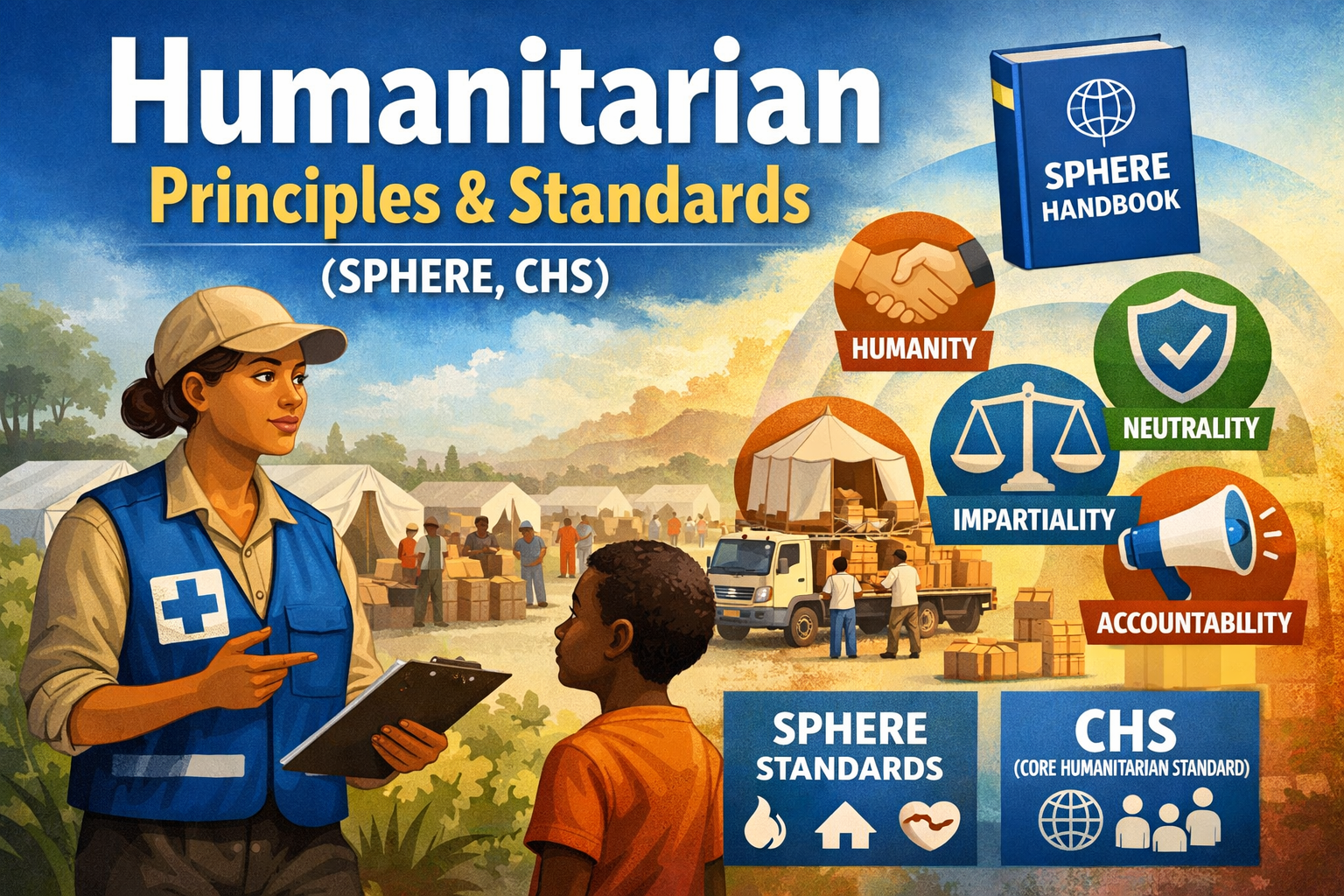
Humanitarian action must be guided by clear principles and internationally recognized standards to ensure aid is ethical, effective, and accountable. For humanitarian workers, understanding Humanitarian Principles, the SPHERE Handbook, and the Core Humanitarian Standard (CHS) is essential for delivering quality humanitarian assistance.
This guide explains these frameworks in a practical and SEO-friendly way for students, NGOs, and humanitarian professionals.
What Are Humanitarian Principles in Humanitarian Aid?
Humanitarian principles are the foundation of all humanitarian work. They ensure assistance is delivered fairly, safely, and based on need.
The four core humanitarian principles are:
1. Humanity
Humanitarian action aims to prevent and alleviate human suffering while protecting life, dignity, and rights.
2. Neutrality
Humanitarian organizations must not take sides in political, religious, or military conflicts.
3. Impartiality
Aid is provided solely on the basis of need, without discrimination based on nationality, gender, religion, or political opinion.
4. Independence
Humanitarian action must remain independent from political, economic, or military objectives.
These principles help humanitarian actors gain trust and access to affected communities.
What Is the SPHERE Handbook?
The SPHERE Handbook is an internationally recognized guide that defines minimum standards in humanitarian response. It helps organizations deliver high-quality, life-saving assistance during emergencies.
SPHERE standards focus on key humanitarian sectors, including:
- Water, Sanitation, and Hygiene (WASH)
- Food Security and Nutrition
- Shelter and Settlement
- Health Services
By applying SPHERE standards, humanitarian organizations can improve effectiveness, coordination, and accountability.
Core Humanitarian Standard (CHS) Explained
The Core Humanitarian Standard (CHS) focuses on how humanitarian organizations operate and how they treat affected populations.
CHS is based on 9 commitments, such as:
- Delivering appropriate and relevant humanitarian assistance
- Strengthening participation of affected communities
- Establishing complaints and feedback mechanisms
- Improving transparency, learning, and ethical behavior
CHS promotes accountability to affected people and encourages continuous improvement in humanitarian programs.
Why Humanitarian Standards Matter in Emergency Response
In today’s complex humanitarian crises—conflict, climate disasters, displacement, and food insecurity—standards are more important than ever.
Humanitarian principles, SPHERE, and CHS help to:
- Reduce harm and prevent abuse
- Improve program quality and impact
- Build trust with communities and donors
- Strengthen coordination among humanitarian actors
Many donors and international organizations now require compliance with SPHERE and CHS standards.
Who Should Learn Humanitarian Principles, SPHERE, and CHS?
This knowledge is critical for:
- Humanitarian field workers
- Program and project managers
- MEAL officers
- Local and international NGOs
- Students and early-career humanitarian professionals
Understanding these standards increases employability and professional credibility in the humanitarian sector.
Conclusion: Building Quality and Accountable Humanitarian Action
Humanitarian principles, the SPHERE Handbook, and the Core Humanitarian Standard are not just guidelines—they are essential tools for ethical and effective humanitarian response.
By applying these standards, humanitarian professionals can deliver assistance that is dignified, accountable, and truly responsive to the needs of affected communities.